Mantra guide
Understanding Sri Raghavendra Swamy Mantra
About this mantra
A stotra verse used as mantra
The text is a verse of praise rather than a short bīja formula. Its two halves move from Raghavendra’s qualities to two traditional images of generosity and fulfilment.
Kalpavriksha and Kamadhenu
The wish-fulfilling tree and cow are comparisons within the verse. They express devotional confidence; the page should not turn them into a literal guarantee that every request will be granted.
Shared research, distinct voices
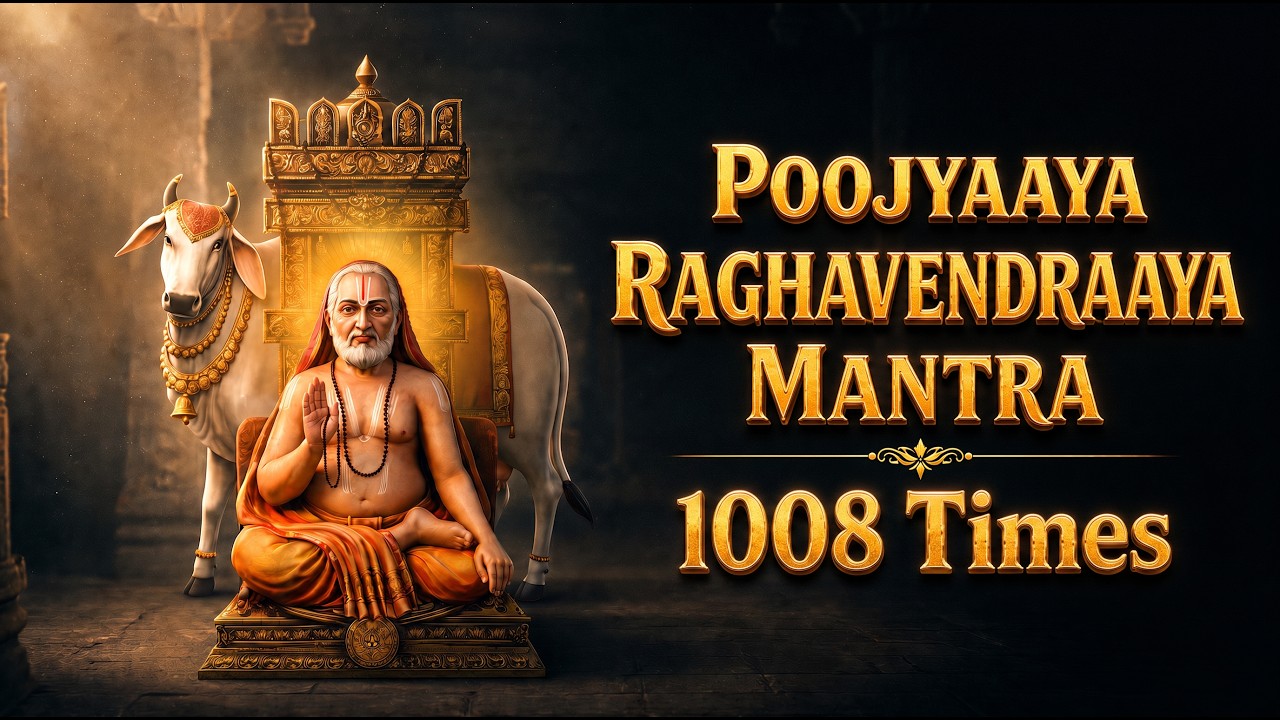
Original recording and Second recording are separate recording families for the same canonical verse. The hub should share sacred text and editorial context while family-specific cards, thumbnails, boards and sessions remain distinct.
Devotional context
The notes below describe how this text is traditionally understood and used. They are not promises of any outcome.
Praise through ethical qualities
The first half honours Raghavendra as venerable and devoted to truth and dharma.
Two parallel abundance images
Kalpavriksha and Kamadhenu are used as devotional comparisons for those who worship and bow. They are the verse’s own primary imagery.
One canonical text, two recording families
Original recording and Second recording share this exact research record but remain separate productions. Neither family should absorb the other’s audio, thumbnail, variants, or live occurrences.
How to listen or chant
- 1.
Read the canonical text first
Read Sri Raghavendra Swamy Mantra once in Devanagari and once in transliteration. Use the word-by-word panel to see where the names and grammatical endings fall before repeating the audio.
- 2.
Set a pace that keeps the words clear
Pause after satyadharmaratāya ca; then let kalpavṛkṣāya and kāmadhenave mirror one another in the second line.
- 3.
Use one recording family at a time
Choose the voice and duration you intend to follow. Changing duration within that family does not change the canonical text; changing to another family may change voice, melody, or a documented sung variant.
- 4.
Keep the intention grounded
Contemplate Raghavendra’s devotion to truth and dharma, reading the wish-fulfilling images as devotional praise rather than guaranteed fulfilment.
- 5.
Close without rushing
After the final repetition, allow a short quiet pause. If attention wandered, return to the text gently rather than treating the count as a test or a promise of results.
Sources and editorial note
- Sri Krishna Brundavana Temple — Raghavendra Stotra
Temple
Exact verse and devotional context
- Sri Raghavendra Swamy Mutt, Chromepet
Matha
Exact verse in Raghavendra worship
- Monier-Williams Sanskrit-English Dictionary
Cologne Digital Sanskrit Dictionaries
Lexical and grammatical checking for Sanskrit terms; use alongside mantra-specific textual sources.
The Sanskrit text, transliteration and meaning on this page are published for devotional and educational use, and are reviewed before a page goes live. Traditions differ; where your family or temple reads a line differently, theirs is the one to follow. Read how this material is checked on the Editorial & Sources page, or tell us about a correction.