Mantra guide
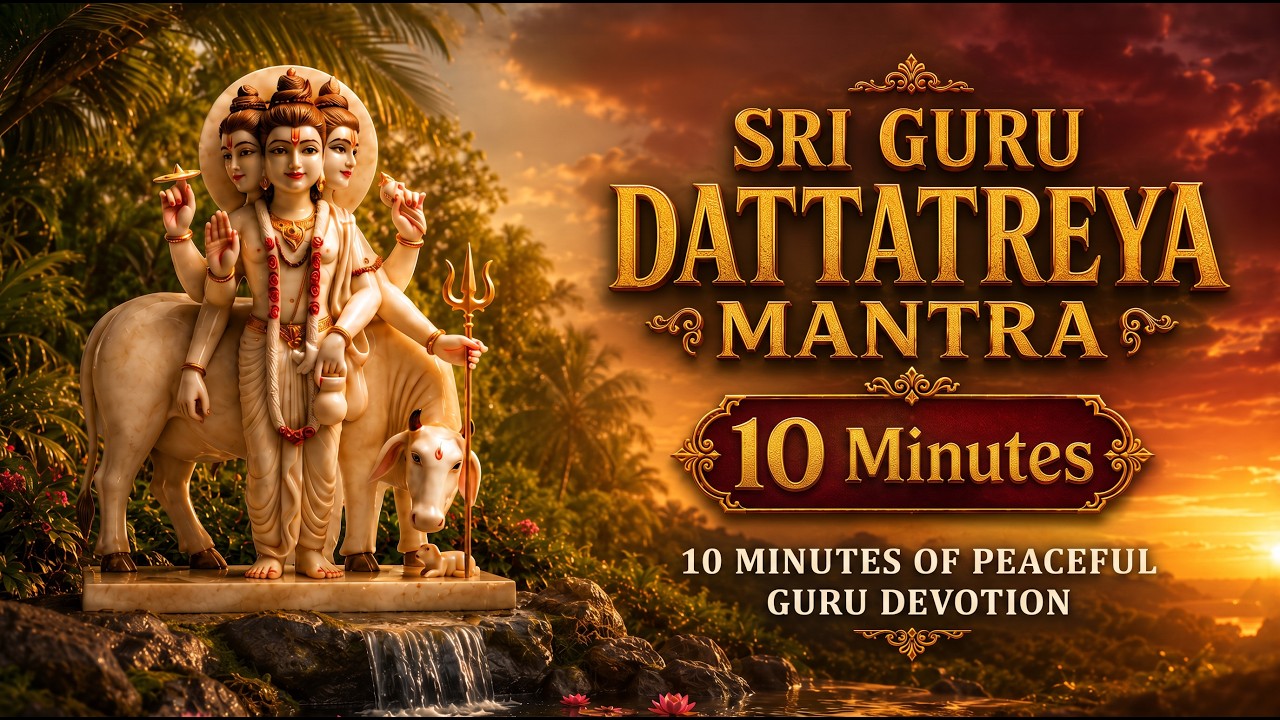
Understanding Sri Guru Dattatreya Mantra
About this mantra
The Dattatreya formula
The cited Dattatreya Kalpa collection provides the textual setting for the seed-and-name form. The page can identify that tradition while keeping the mantra itself compact.
Seed sound and direct address
Drāṃ is preserved as sacred sound; Dattātreyāya identifies the addressee. The page should not assign the seed syllable a single invented translation.
A salutation suited to steady repetition
Because the line is short, clarity matters more than speed. A full pronunciation of dattātreyāya prevents the divine name from collapsing into an indistinct sound.
Devotional context
The notes below describe how this text is traditionally understood and used. They are not promises of any outcome.
A bīja-and-name formula
The structure is oṃ + drāṃ + Dattatreya in the dative + namaḥ.
Dattatreya is the addressee
Dattātreyāya means “to Dattatreya,” making the grammar of the salutation explicit.
The exact formula is traditional
The stored Dattatreya Kalpa source supports the mantra context; the page should avoid expanding this short formula into unsupported biography or promised powers.
How to listen or chant
- 1.
Read the canonical text first
Read Sri Guru Dattatreya Mantra once in Devanagari and once in transliteration. Use the word-by-word panel to see where the names and grammatical endings fall before repeating the audio.
- 2.
Set a pace that keeps the words clear
Hold the long ā in drāṃ, then pronounce dat-tā-tre-yā-ya clearly before namaḥ.
- 3.
Use one recording family at a time
Choose the voice and duration you intend to follow. Changing duration within that family does not change the canonical text; changing to another family may change voice, melody, or a documented sung variant.
- 4.
Keep the intention grounded
Use the mantra as a direct salutation to Dattatreya and keep the practice free of miracle claims.
- 5.
Close without rushing
After the final repetition, allow a short quiet pause. If attention wandered, return to the text gently rather than treating the count as a test or a promise of results.
Sources and editorial note
- Dattatreya Kalpa — Sanskrit Documents
Traditional source
Exact द्रां mantra spelling
- Dattatreya mantra collection — Sanskrit Documents
Traditional compilation
Cross-check
- Monier-Williams Sanskrit-English Dictionary
Cologne Digital Sanskrit Dictionaries
Lexical and grammatical checking for Sanskrit terms; use alongside mantra-specific textual sources.
The Sanskrit text, transliteration and meaning on this page are published for devotional and educational use, and are reviewed before a page goes live. Traditions differ; where your family or temple reads a line differently, theirs is the one to follow. Read how this material is checked on the Editorial & Sources page, or tell us about a correction.