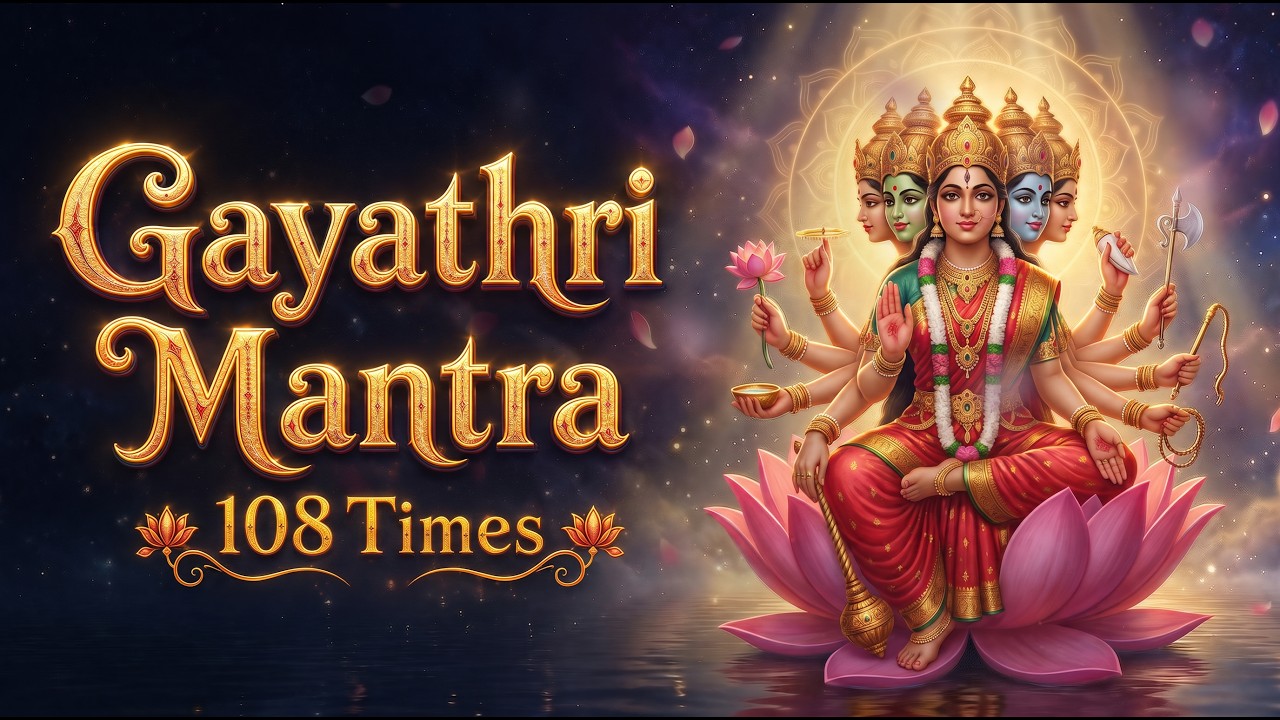
Mantra guide
Understanding Gayatri Mantra
About this mantra
Where the verse comes from
The Gayatri Mantra is a single verse of the Rigveda, the tenth verse of the sixty-second hymn of the third maṇḍala — Rigveda 3.62.10. In the Saṃhitā it is not set apart as a special formula: it stands within a hymn among neighbouring verses, and its recorded deity is Savitā, the impeller. The same verse recurs in the Yajurveda, which Sāyaṇa notes at Yajus 3.35, and that repetition is one reason it became so widely known in recitation. What the Rigvedic text itself contains is only the three lines beginning tat savitur vareṇyam. The opening oṃ bhūr bhuvaḥ svaḥ that most listeners expect to hear is a liturgical prefix drawn from the mahāvyāhṛtis, added when the verse is recited rather than quoted; the Taittirīya Āraṇyaka preserves that framing. Keeping the two layers distinct is useful: it explains why printed Rigveda editions and chanted recordings can look different while neither is wrong.
Savitṛ, the deity addressed
Savitṛ is the sun considered under one particular aspect: not the disc in the sky as an object, but the impeller, the one who sets things moving. The name comes from the root meaning to impel or bring forth, and the verse uses the matching verb at its close — pracodayāt, may he impel. Sāyaṇa's commentary offers two ways of hearing this. In one, savitā is the radiant sun, the progenitor of all, and the light asked for is the light of that orb. In the other, savitā is understood as the inner self, one with the world's own light, and the meditation is on that. Both readings are recorded side by side in the traditional commentary, and the verse itself does not force a choice between them.
What the words ask for
The grammar of the verse is unusually plain. Tat savitur vareṇyam bhargo devasya dhīmahi: we meditate on that desirable radiance of the god Savitṛ. Then dhiyo yo naḥ pracodayāt: which may impel our understandings. There is no petition for wealth, safety, healing or any specific outcome anywhere in the three lines. The only thing asked of the light is that it move our thinking. Vareṇyam marks the light as worth choosing; bhargas names it as radiance; dhīmahi places the speaker in the act of meditating rather than requesting. Read this way the verse is less a formula for obtaining something than a sentence describing an attention being turned in one direction.
Devotional context
The notes below describe how this text is traditionally understood and used. They are not promises of any outcome.
A verse addressed to Savitṛ
The recorded deity of the verse is Savitā (Savitṛ), the impeller — the sun considered as the power that sets things in motion. The verse speaks to that light rather than describing a ritual or asking for a possession.
A prayer for clear understanding
The single request in the verse is pracodayāt — that the light may impel or inspire our dhiyaḥ, our thoughts and understandings. Wilson renders the line "who influences our pious rites", and Sāyaṇa glosses dhiyaḥ as both acts and intellect.
Light as the central image
Bhargas, the word at the centre of the verse, means radiance. Sāyaṇa reads it as light that consumes ignorance, and also records a plainer reading in which the orb of the sun and the sustenance it gives are meant.
Named after the Gāyatrī metre
The verse takes its common name from its metre. The Rigvedic record marks it as nicṛd gāyatrī — a gāyatrī of three eight-syllable lines — and the name Gāyatrī has attached itself to this verse above all others in the metre.
How to listen or chant
- 1.
Read the verse before you chant it
Read the Sanskrit and the word-by-word sense once, slowly, so the sounds already mean something to you. The verse is three short lines addressed to Savitṛ; knowing where each line ends makes the recitation steadier than trying to memorise it as one long string.
- 2.
Sit in a way you can keep
Choose a seat you can hold comfortably for the length of the recording. Nothing about the verse requires a particular posture, direction or object in front of you; traditions differ, and a settled body is the practical point.
- 3.
Follow the recording first
Listen through once without chanting, then join quietly on the second pass. Following a recording is a way to learn the shape of the lines; it does not replace instruction from a teacher, which many lineages consider essential for this verse in particular.
- 4.
Keep the metre even
The verse is set in the gāyatrī metre — three lines of eight syllables, recorded here as nicṛd gāyatrī. Let each line take about the same time rather than speeding up towards the end; an even pace is easier to sustain than a fast one.
- 5.
Choose a length that suits the day
Practice customs vary widely by lineage and teacher, including the time of day and the number of repetitions. Rather than following a count you cannot keep, pick a published length on this page that fits the time you actually have.
Sources and editorial note
- Rigveda 3.62.10 — Sanskrit Documents
Primary scripture
Canonical Gayatri verse
- Taittiriya Aranyaka — Mahavyahriti context
Primary scripture
Liturgical prefix context
- Rig Veda 3.62.10 — H. H. Wilson translation with Sāyaṇa's commentary, padapāṭha and verse metadata
Wisdom Library
Location of the verse at Rigveda 3.62.10, its deity (Savitā), its metre (nicṛd gāyatrī), its word-by-word padapāṭha division, its recurrence at Yajus 3.35, and Sāyaṇa's reading of bhargas, vareṇyam and pracodayāt.
- Monier-Williams Sanskrit-English Dictionary
Cologne Digital Sanskrit Lexicon
Lexical checking of each Sanskrit word in the verse and of the three mahāvyāhṛtis.
The Sanskrit text, transliteration and meaning on this page are published for devotional and educational use, and are reviewed before a page goes live. Traditions differ; where your family or temple reads a line differently, theirs is the one to follow. Read how this material is checked on the Editorial & Sources page, or tell us about a correction.


