Mantra guide
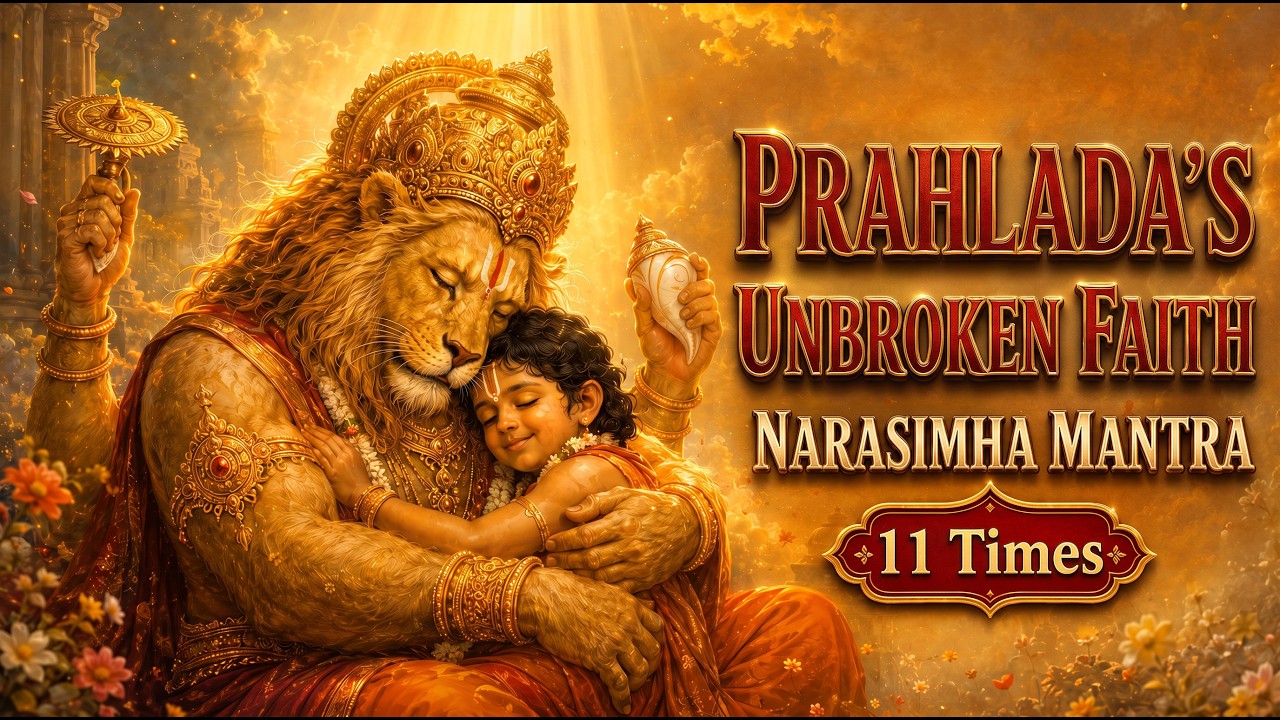
Understanding Narasimha Mantra
About this mantra
What the mantra says
Narasimha Mantra is presented first as sacred text, not as a slogan. The canonical reading is “Om namo Bhagavate Narasimhaya namas tejas-tejase avir-avirbhava vajra-nakha vajra-damshtra karmashayan randhaya randhaya tamo grasa grasa Om svaha; abhayam abhayam atmani bhuyishtha Om kshraum.” and the conservative meaning is: Salutations to Bhagavan Narasimha, the power of all power. Please manifest, cut through binding karmic tendencies and consume darkness; may fearlessness be established within. Om Svaha; Kshraum is preserved as the concluding seed syllable.
How the form is used
The wording addresses Narasimha / Vishnu through the śrīmad-bhāgavatam 5.18.8 mantra form recorded in the source ledger. Different musical arrangements may exist, while this page keeps one stable textual identity.
Tradition with clear boundaries
Exact match to Śrīmad-Bhāgavatam 5.18.8. It must remain a distinct canonical text from row 21 despite the same supplied public name. Traditional petitions are presented devotionally, not as guaranteed protection or therapy.
Devotional context
The notes below describe how this text is traditionally understood and used. They are not promises of any outcome.
Textual form
Narasimha Mantra is catalogued here as a Śrīmad-Bhāgavatam 5.18.8 mantra. Its public explanation follows the exact submitted wording and the source ledger rather than adding claims.
Devotional address
Salutations to Bhagavan Narasimha, the power of all power. Please manifest, cut through binding karmic tendencies and consume darkness; may fearlessness be established within. Om Svaha; Kshraum is preserved as the concluding seed syllable.
Research boundary
Exact match to Śrīmad-Bhāgavatam 5.18.8. It must remain a distinct canonical text from row 21 despite the same supplied public name.
How to listen or chant
- 1.
Read the authored text first
Read Narasimha Mantra once in its authored Devanagari line structure, then use the Reading Guide without changing the Sanskrit.
- 2.
Keep words and pauses clear
Follow the displayed word boundaries and punctuation. Use Om namo Bhagavate Narasimhaya namas tejas-tejase avir-avirbhava vajra-nakha vajra-damshtra karmashayan randhaya randhaya tamo grasa grasa Om svaha; abhayam abhayam atmani bhuyishtha Om kshraum. as the approved Roman guide rather than improvising a new spelling.
- 3.
Choose a steady repetition
Select one available recording length and maintain an unforced pace. Duration changes do not change the canonical mantra text.
- 4.
Keep the intention grounded
Approach the practice as devotion and attentive remembrance of Narasimha / Vishnu. Traditional petitions are presented devotionally, not as guaranteed protection or therapy.
- 5.
Close with a quiet pause
After the final repetition, pause briefly. Treat counts and durations as listening formats, not as guarantees of a particular outcome.
Sources and editorial note
- Śrīmad-Bhāgavatam 5.18.8
Exact Sanskrit, transliteration and word meanings
- Śrīmad-Bhāgavatam 5.18.8 — parallel edition
Independent exact-text cross-check
The Sanskrit text, transliteration and meaning on this page are published for devotional and educational use, and are reviewed before a page goes live. Traditions differ; where your family or temple reads a line differently, theirs is the one to follow. Read how this material is checked on the Editorial & Sources page, or tell us about a correction.